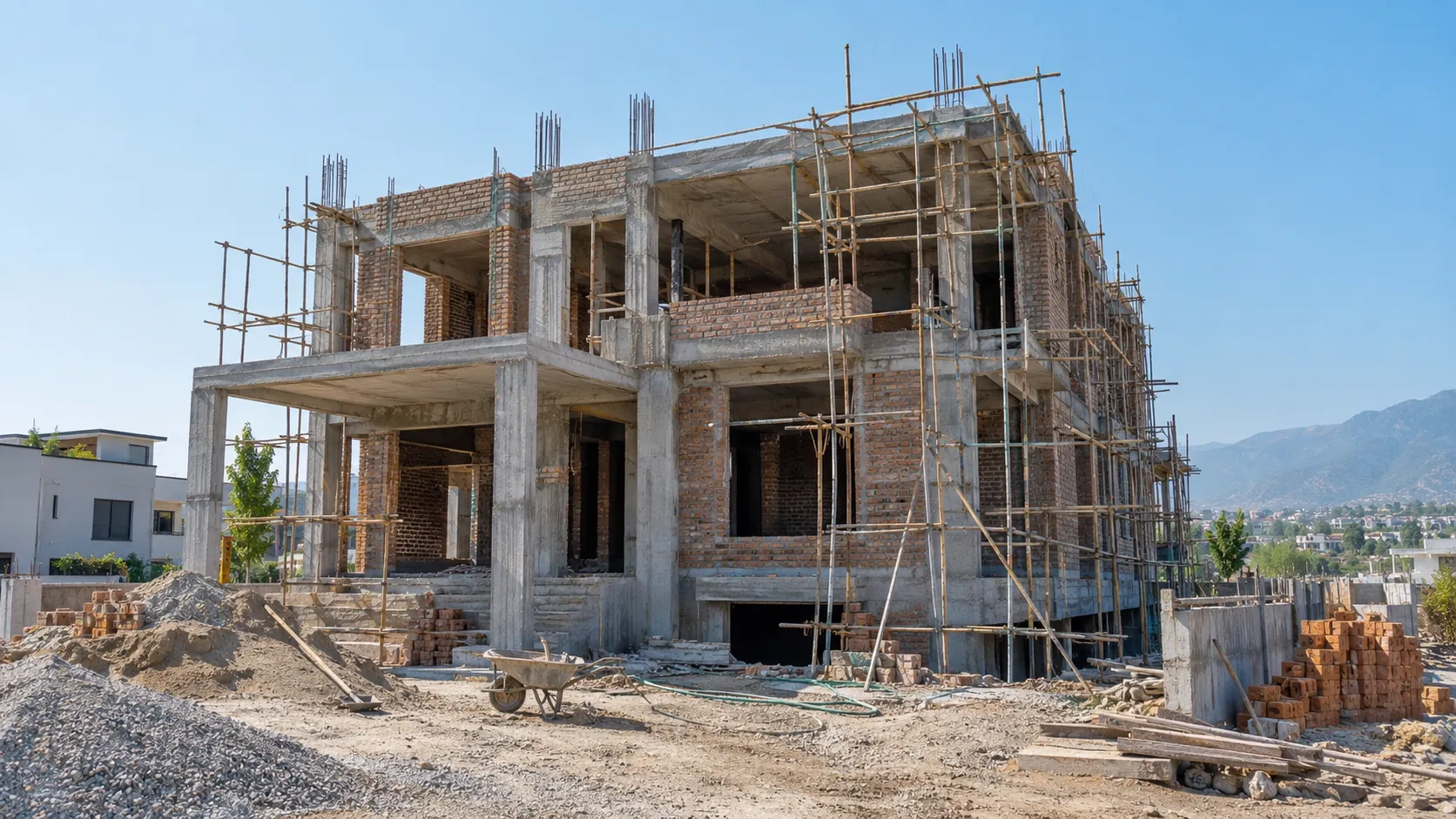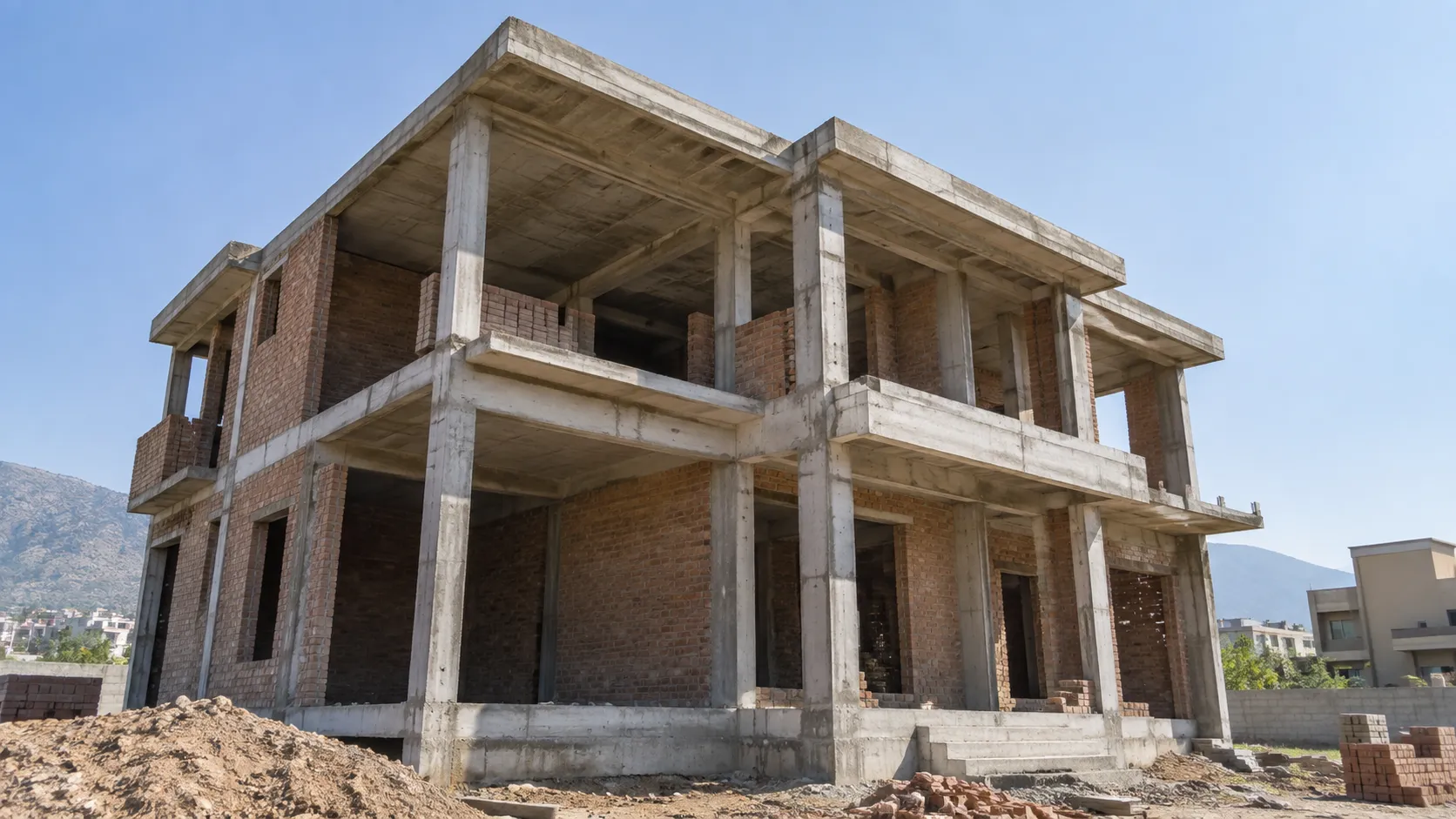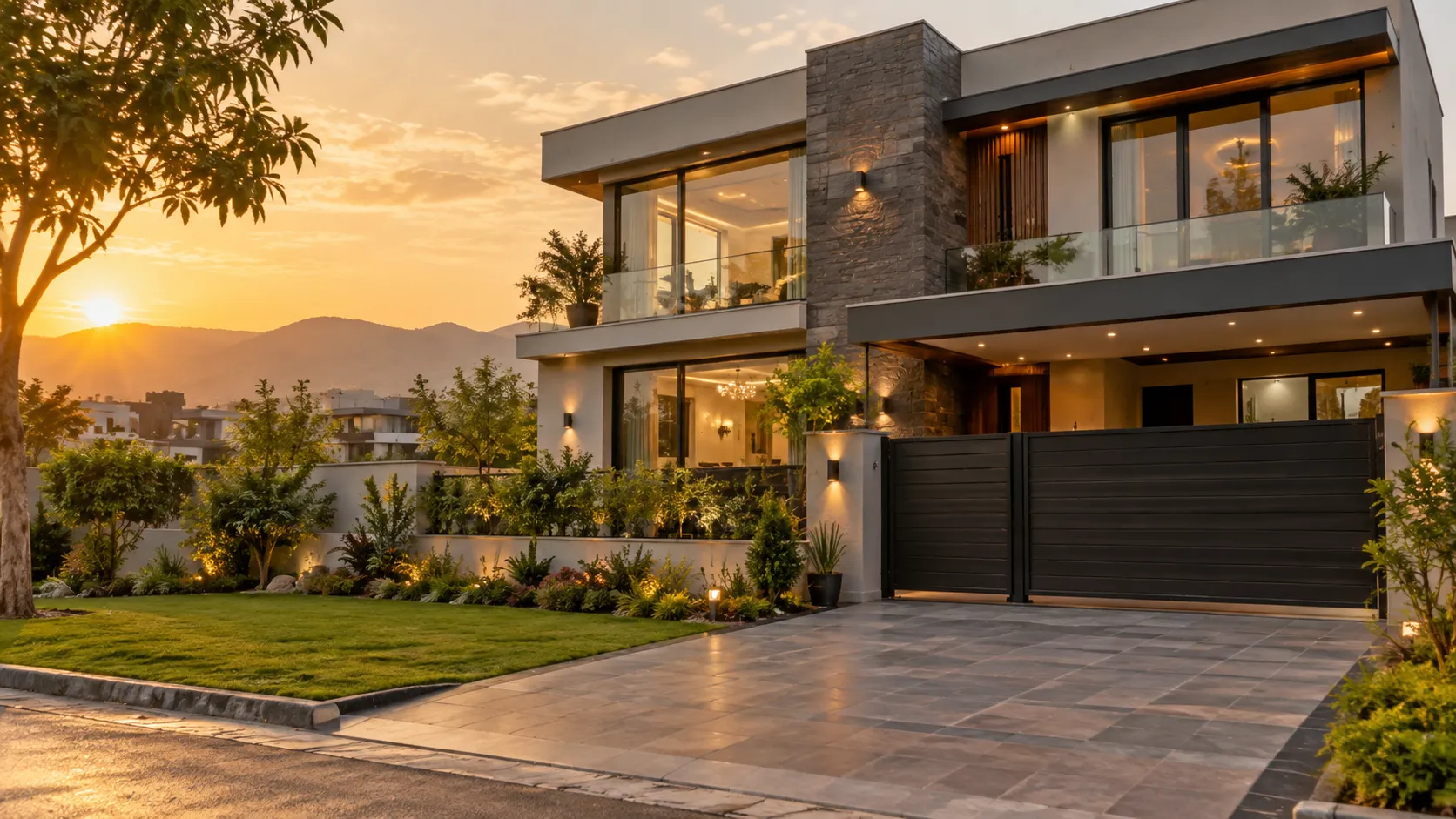
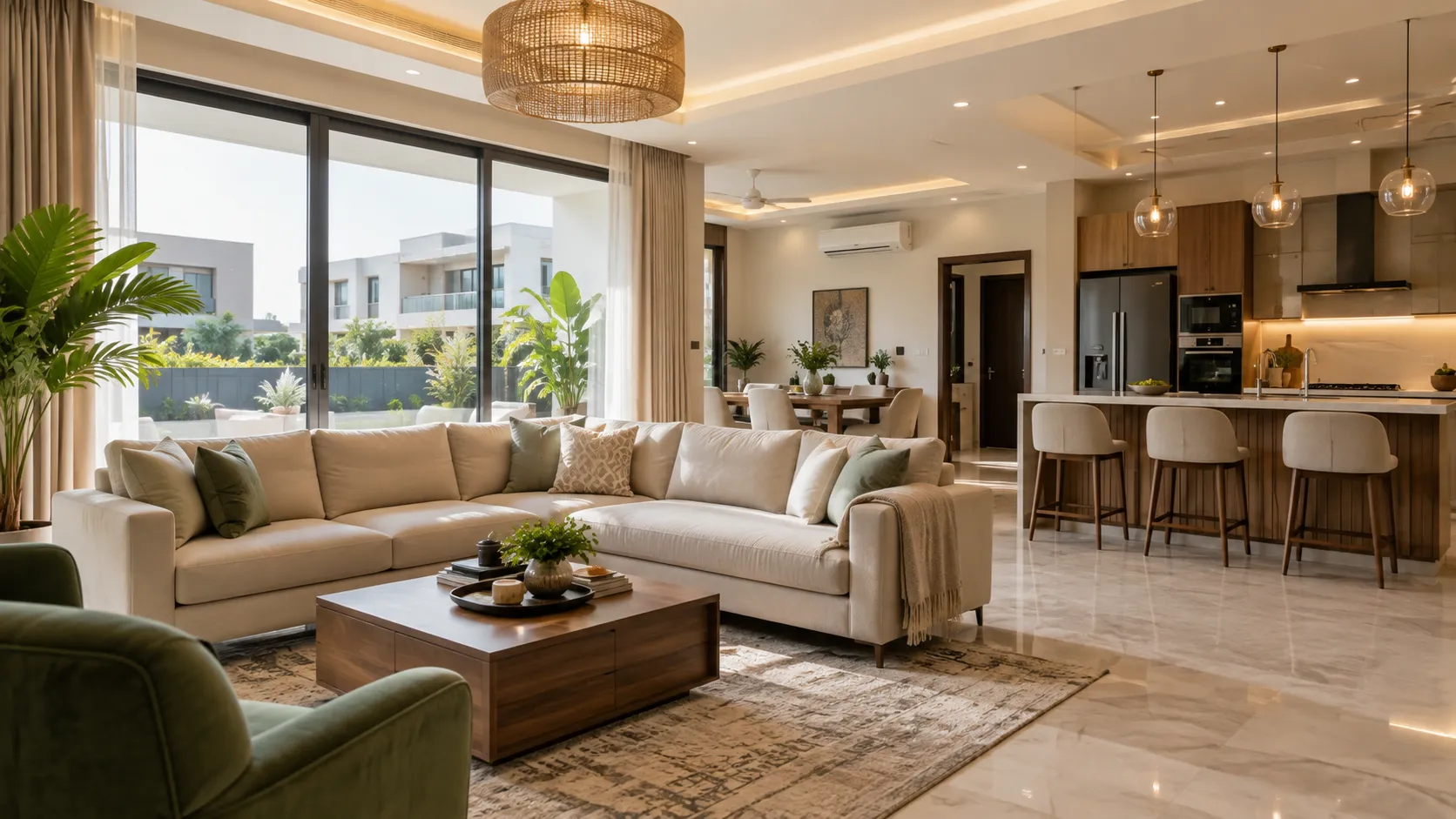
Turnkey construction is the package owners pick when they want one team through handover. In Tryino’s definitions it means the structural work plus the finishing listed in the specification schedule — not an open-ended interiors brief.
Typically included once named in the BOQ: flooring, paint and ceilings, kitchen and wardrobes, sanitary fixtures, electrical fixtures, doors and windows at the finish-package level, and a ready-to-move handover against the agreed finish. The turnkey service page and the comparison matrix on Grey vs Semi vs Turnkey use those same categories.
A room-by-room look at turnkey scope
Those categories cover the whole house, but owners comparing two quotations usually want to know what each one means room by room. What follows are general scope categories — the specific brand, model or exact grade belongs in the BOQ, never in a marketing page:
- Flooring: a named flooring type and grade for each area — living and dining spaces, bedrooms, kitchen, and a separate, more water-resistant category for bathrooms and wet areas — plus skirting.
- Kitchen: base and wall cabinetry, a worktop material, and the plumbing and electrical points for the appliances the owner plans to install. The appliances themselves are typically excluded unless separately contracted.
- Bathrooms: sanitary fixtures (WC, basin, and a shower or bath fitting), wall and floor tiling to a specified height, and the fittings that accompany them — a named category and grade, not an open allowance.
- Electrical fixture packages: switches, sockets, light fittings and distribution boards to an agreed grade, along with wiring to the points the drawing calls for.
- Paint: interior and exterior paint to a specified number of coats and a named product category — distinct from the base plaster already covered under grey structure.
- False ceilings: gypsum or equivalent false ceiling in the rooms the drawing specifies — commonly living areas and corridors, sometimes bedrooms — rather than assumed throughout the house.
- Doors and windows: a finish-package-level specification, a step up from the openings fitted at grey-structure stage, but still a named category rather than whatever happens to be available on site that week.
None of these categories is a fixed brand or a fixed PKR allowance — that is exactly what the specification schedule exists to pin down. A turnkey quotation that simply lists “flooring” or “sanitary fixtures” with no grade attached has not actually told you what you are buying, and a semi-finished package that touches only some of these categories should say explicitly which ones it leaves out.
Typically excluded unless separately contracted: furniture, appliances, landscaping, land, society or authority charges, and brand upgrades beyond the specified allowance. Semi-finished sits in between — selected finishing only, also defined in the BOQ, which is why we refuse to pretend every contractor’s “semi” means the same thing.
How finish level changes what’s actually delivered
Turnkey is normally offered at more than one finish level — standard, premium and luxury are the common labels used across the industry. The label does not describe a different house; it describes a different grade within each of the categories above.
- Standard: the base named category in each line — functional flooring, cabinetry and fixtures that meet the specification without premium branding or custom joinery.
- Premium: a step up in material grade and finish quality within the same categories — higher flooring tiers, more detailed cabinetry, upgraded sanitary fixtures and lighting.
- Luxury: higher-grade materials, more custom joinery and detailing, and typically more fixture and finish decisions to work through before the BOQ can be finalized.
Finish level mostly changes fittings, joinery and material grade — it does not change the structural frame underneath, which is already built at the grey-structure stage. It does change how wide the planning range is: a luxury package leaves more selections open at contract stage, so an owner choosing luxury should expect more selection meetings, not just a higher number. For the actual PKR figures at each finish level, use the Cost Calculator with turnkey selected rather than a rule of thumb, and see turnkey construction cost in Islamabad for how those figures are put together.
Turnkey is not a quality ranking over grey. Grey structure is a different product. Some owners should stay on grey if they already have finishing vendors; others save coordination risk by choosing turnkey and writing selections down early.
What to get in writing before you sign
The categories and finish levels above are only useful once they sit inside a document you can hold a contractor to. Before signing a turnkey contract, ask for a specification sheet or BOQ that names, for every category above, the specific category and grade — not just the word “turnkey”:
- Flooring type and grade, by room
- Kitchen cabinetry material and worktop category
- Sanitary fixture category, per bathroom
- Electrical fixture package and approximate point count
- Paint specification, interior and exterior
- False ceiling locations
- Door and window specification level
This is the same BOQ discipline the site applies to grey structure and semi-finished, tied to a milestone payment plan rather than a lump sum released against a vague scope. See the Sample BOQ for the format, and Build Assurance for how scope disputes are meant to be avoided rather than argued over after materials are already on site.
For money, use the turnkey construction cost article and the Cost Calculator with turnkey selected. For documentation habits, use the Sample BOQ and Build Assurance. Turnkey projects illustrate delivery.
If a quotation says “turnkey” without a finish schedule, it is not a complete offer. Ask for the specification that this page points to — then we can price your plot instead of arguing about the word. That discipline holds whether the project is in Islamabad or Rawalpindi — the specification does not change by city, even where the price moves slightly.