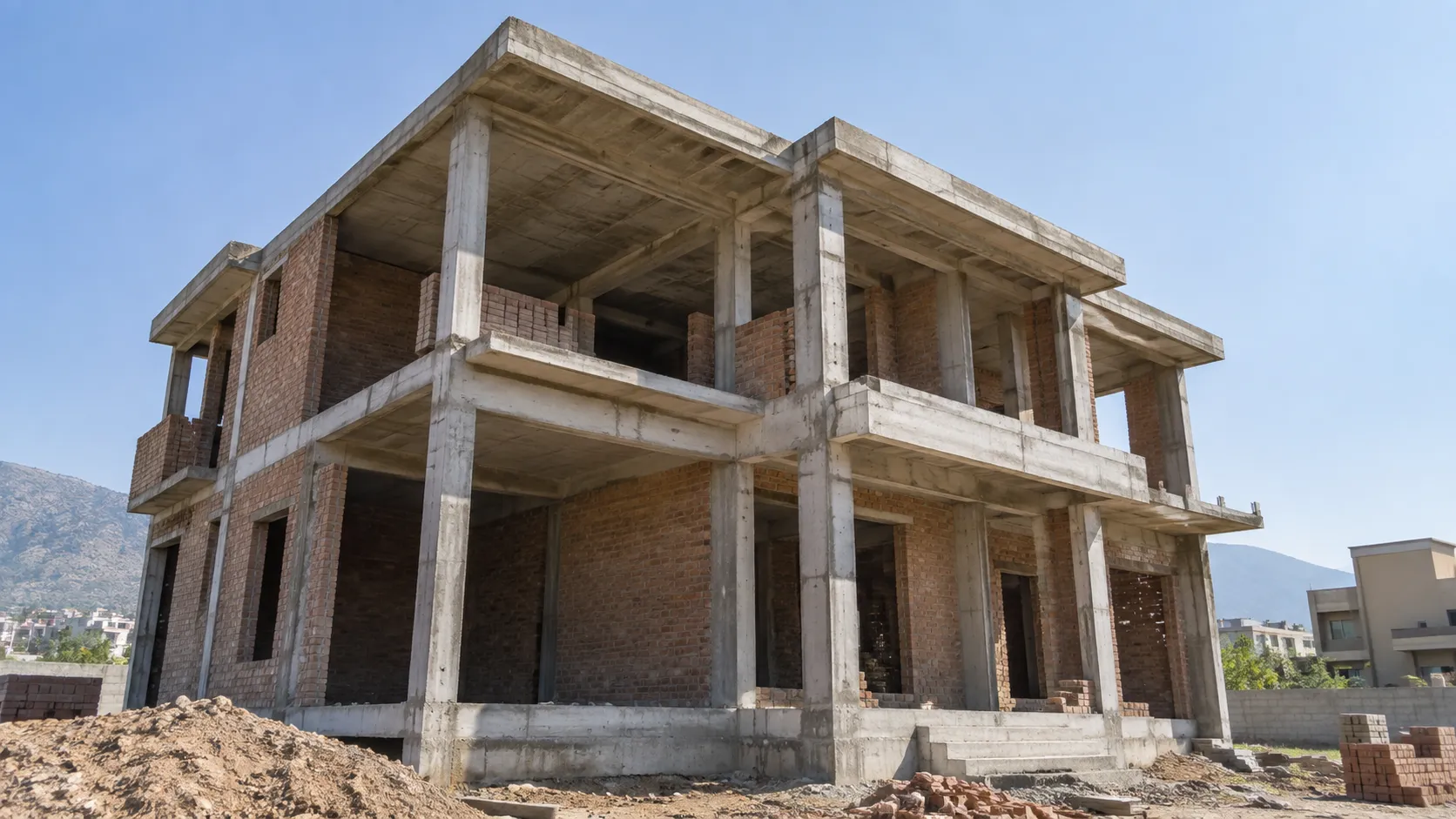
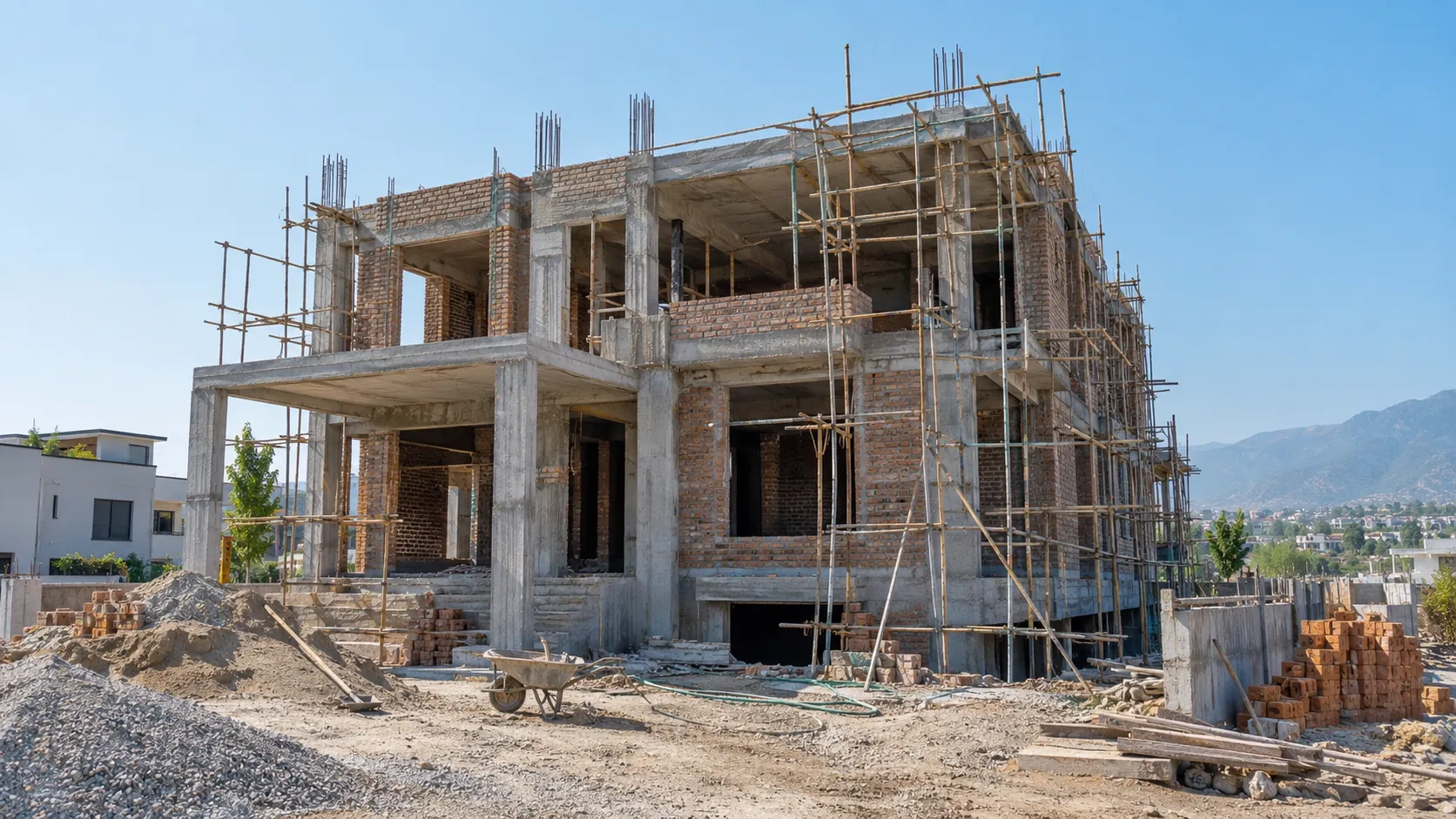
Grey structure is the construction stage most owners hear about first — and misunderstand most often. In Tryino’s scope definitions, grey structure is the structural shell and related envelope work agreed in the contract and bill of quantities (BOQ). It is not a finished home, and it is not “everything except paint.”
Typically, grey structure focuses on foundations, columns, slabs, masonry, basic plastering, structural openings and MEP rough-ins as defined in the drawings. Exact inclusions always follow the signed scope and BOQ — never a verbal per-sqft promise.
What’s inside the structural shell
Grey structure is one line in a BOQ, but it bundles several distinct trades. In general construction practice — not a Tryino-specific formula, but the standard vocabulary any contractor should use the same way — the structural shell typically covers:
- Foundation: a footing, raft or pile system sized to the plot’s soil bearing capacity and confirmed by a structural engineer, not a fixed depth applied to every site. Strip or isolated footings are common on smaller plots; a raft or pile foundation is used where soil conditions or loading require it.
- RCC frame: the reinforced-concrete columns and beams that carry the building’s load down to the foundation — the “skeleton” the rest of the house is built on.
- Masonry: the block or brick infill walls built between the RCC columns once the frame has cured, generally non-load-bearing in a frame structure.
- Roof slab: the RCC slab cast over each storey, including the final roof, waterproofed at grey stage but not finished with a walkable roof treatment.
- MEP rough-in: electrical conduits, plumbing sleeves and drainage pipe runs laid inside walls and slabs before plaster closes them in — the rough routing, not the fittings, fixtures or panels installed later.
- Basic plastering: the first structural plaster coat that seals masonry, distinct from the finish-grade plaster and paint applied at turnkey stage.
These are general construction-industry terms, not a substitute for the specific scope in your BOQ — as above, the exact items and their quality specification always follow the signed drawings and bill of quantities.
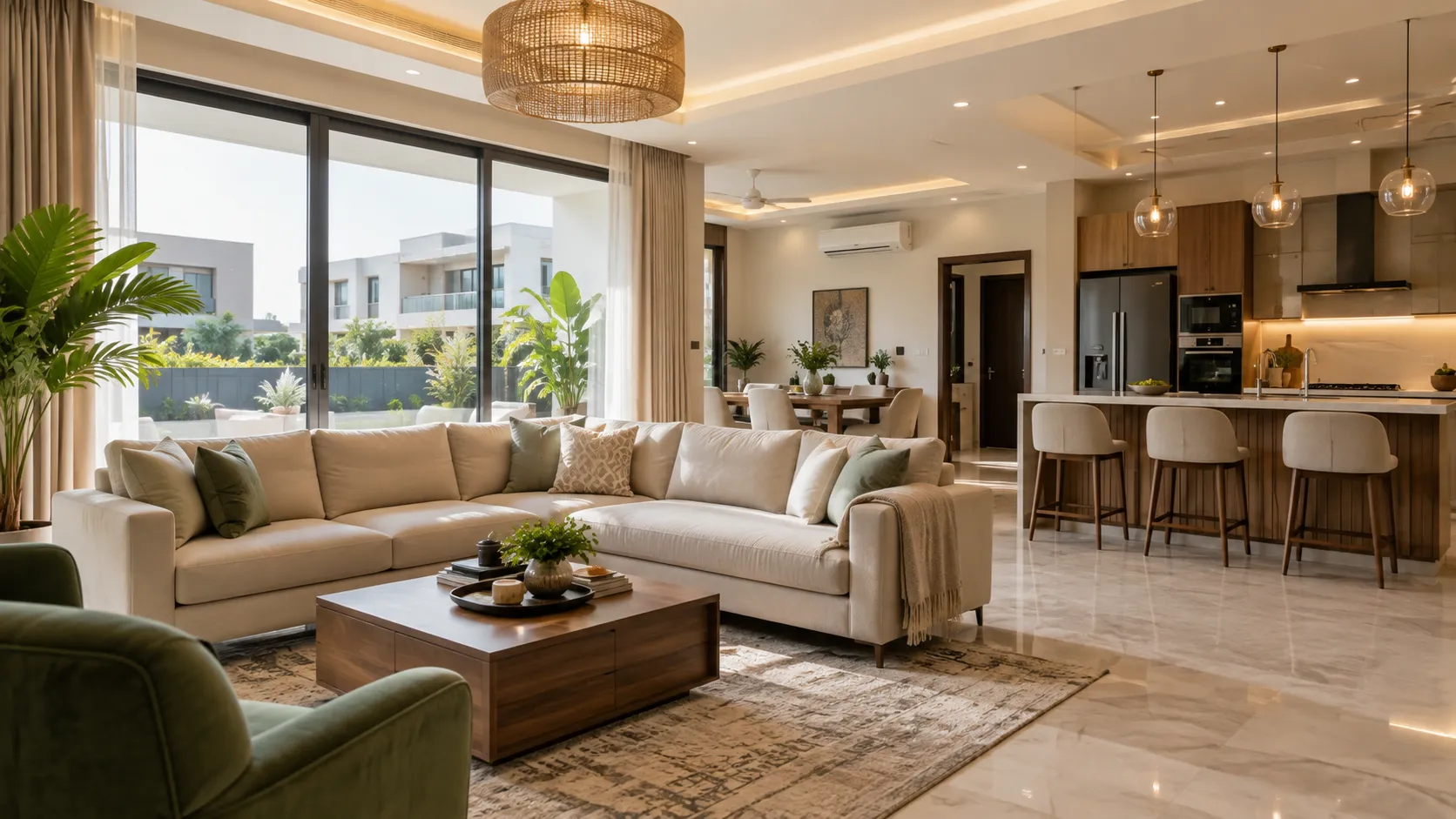
What grey structure usually does not include: full sanitary ware, complete electrical fixtures, wardrobes, final flooring packages, kitchens and decorative finishes associated with turnkey handover. Those sit in semi-finished or turnkey packages depending on how you structure the project.
Grey structure vs semi-finished vs turnkey: rate comparison
Tryino’s live Cost Calculator publishes a per-covered-sqft rate for each package tier, which makes the scope jump between them visible in cost terms rather than left to guesswork. These are the published 2026 rates, in PKR per covered sqft:
| Package | Standard | Premium | Luxury |
|---|---|---|---|
| Grey structure | 3,200 | 3,300 | 3,500 |
| Semi-finished | 6,000 | 6,500 | 7,200 |
| Turnkey | 7,800 | 8,500 | 9,000 |
These figures come from the live Cost Calculator configuration, not a fixed rate card — always confirm the current number there before budgeting, since construction rates move. The calculator also publishes an uncertainty band for each tier: roughly ±6-7% for grey structure, ±8-10% for semi-finished and ±8-12% for turnkey — a reminder that a per-sqft rate is a planning estimate, not a fixed quotation until a BOQ is signed.
The jump from grey to semi-finished roughly doubles the per-sqft rate, and turnkey adds a further premium on top, because each tier adds entire trades — electrical fixtures, sanitary ware, flooring, kitchens, paint — rather than a proportional markup on the same work. That is also why comparing “cost per sqft” across contractors only means something once you know which package it prices. See turnkey construction cost in Islamabad and grey structure cost in Islamabad for the cost drivers behind each tier.
Why owners choose grey structure: cashflow control, the ability to stage interiors later, or to appoint a separate finishing contractor. Why some should not: if you need a move-in-ready home on a fixed timeline with one responsible contractor, turnkey (or a well-defined semi-finished package) may reduce coordination risk.
Who should choose grey structure — a decision framework
Building on the reasons above, grey structure tends to fit a narrower set of situations well:
- You want to release your own budget in stages, matching finishing spend to cashflow rather than to a contractor’s schedule.
- You already have, or intend to separately hire, a trusted finishing contractor, interior designer, or tile and kitchen vendor.
- You are building for a future occupant whose finishing preferences are not settled yet.
- You are an overseas owner who wants the structural risk closed out first, then plans a dedicated finishing phase later, in person or remotely managed.
It tends to fit poorly when you need one contractor accountable end-to-end, when you are working to a fixed move-in date, or when you do not have the time to manage a second finishing contractor’s schedule and quality yourself. In those cases, turnkey — or a clearly scoped semi-finished package — keeps a single point of responsibility, which is also what Tryino’s Build Assurance program is designed to protect, whichever package you choose.
How to compare quotations: insist on a BOQ aligned to drawings, named structural responsibility, and milestone payments tied to inspectable work. Our Contractor Comparison Scorecard and Sample BOQ help you ask for documentation rather than competing only on rate.
Grey structure vs turnkey is not a quality ranking — it is a scope boundary. Read the full Grey vs Semi vs Turnkey comparison for side-by-side inclusions. For planning money, use the Cost Calculator with grey selected or read grey structure cost in Islamabad — that article is about cost drivers, this one is about scope.
If you are reviewing a published Tryino grey-structure project, use it as a delivery reference for plot size and location — then estimate your own build with current calculator inputs. Historic project spend is never reused as today’s quotation.