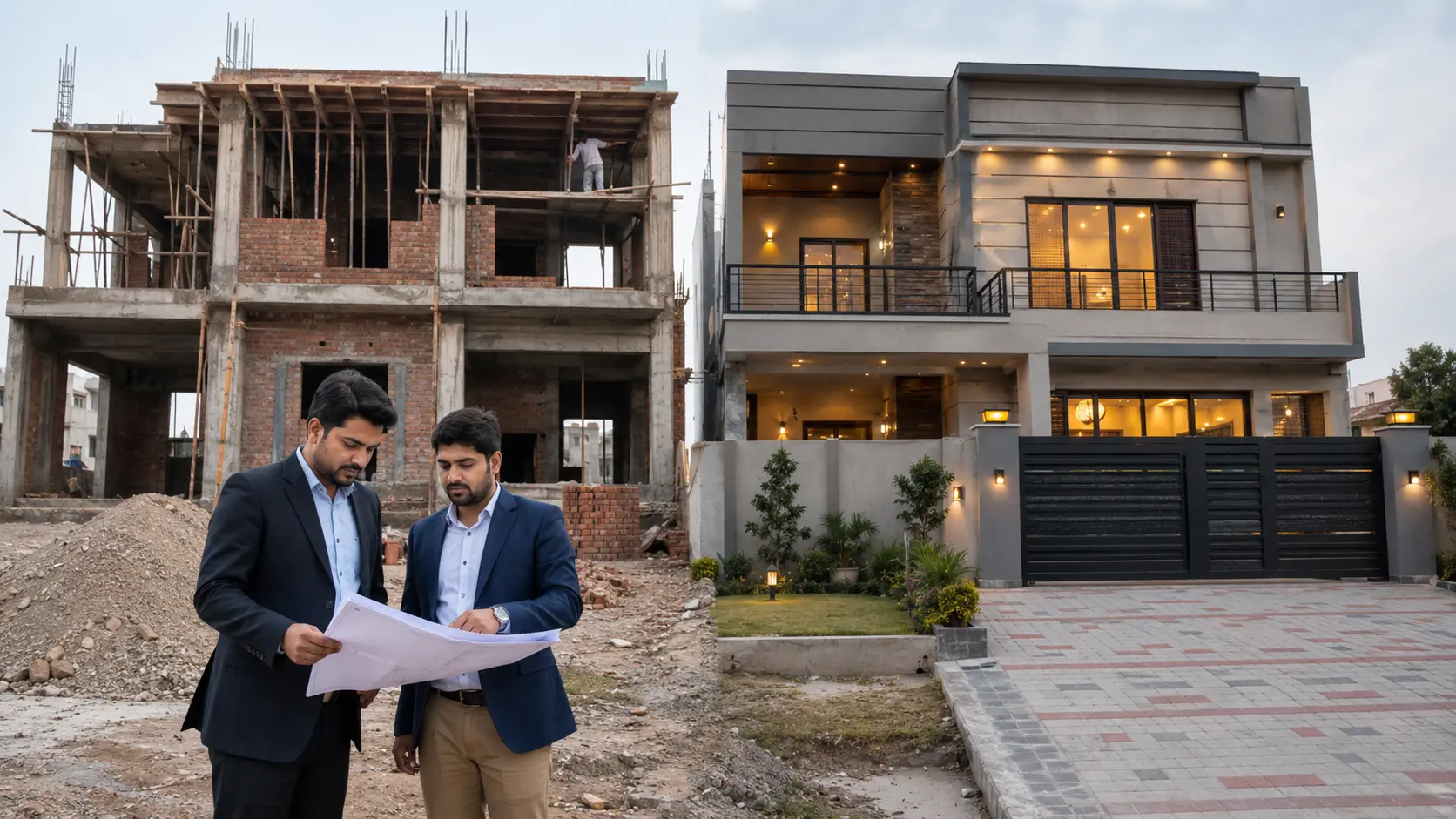

How do you vet a builder before signing a construction contract in Islamabad? Ask for a written bill of quantities before you sign, not a per-sqft slogan. Name the site engineer and check their PEC registration. Call the last three completed jobs, not a brochure of favourites. Map payment milestones to inspectable work so cash is not front-loaded. Get delay and variation rules in writing. List baseline material brands versus upgrades. Then walk an active site: bar schedules, cube tests, and a pour plan the engineer can explain without calling the owner. Match SECP and PEC names to the contract entity. That checklist is the difference between a documented contractor and a verbal promise.
Ask for a written bill of quantities before you sign, not a per-square-foot slogan. Name the site engineer and check their PEC registration. Call the last three completed jobs, not a brochure of favourites. Map payment milestones to inspectable work so cash is not front-loaded. Get delay and variation rules in writing. List baseline material brands versus upgrades. Then walk an active site: bar schedules, cube tests, and a pour plan the engineer can explain without calling the owner. Match SECP and PEC names to the contract entity. That six-point checklist — BOQ, named engineer, last three references, milestone cash, delay rules, and brands — is how Islamabad and Rawalpindi owners separate a documented contractor from a verbal promise. It is also the same discipline Tryino publishes on Build Assurance so you can compare our process, not our adjectives.
A per-sqft rate is a marketing headline. A BOQ is a list of work, quantities and specifications you can inspect. If a builder will not produce a structured BOQ aligned to drawings, you have no way to compare two offers or to stop silent omissions (plaster, MEP rough-ins, waterproofing). Use Tryino's Sample BOQ and Contractor Comparison Scorecard as the questions you take into every meeting. Sign the BOQ, not the slogan.
Ask who the site engineer will be, by name, and get their PEC number. A company registration is not the same as a named professional on your pour. If the person who priced the job never visits the site, quality decisions will be made by whoever happens to be there. Confirm the name on the contract matches the name you can look up, and that substitutions during the job are notified in writing.
Ask for the last three completed jobs — not cherry-picked show homes. Call the owners. Ask whether the milestone dates held, whether variations were priced before they were built, and whether snagging after handover was documented. A builder who cannot name recent clients in the societies you actually own is asking you to trust a brochure.
Ask what payment milestones look like. Anything heavily front-loaded — large mobilisation with little inspectable work — is a warning. Milestone payments should follow visible stages: excavation, plinth, slab, masonry, MEP rough-ins, finishes. Read payment plans for how Tryino structures that conversation, then insist your own contract uses inspectable gates rather than calendar dates alone.
Ask what happens if the schedule slips. Weather, drawings and society approvals all move programmes. The useful answer is written: how delays are notified, how parallel work is re-planned, and how extra cost is treated when the delay is the owner's (late selections) versus the contractor's. A shrug is not a programme.
Ask which material brands are baseline versus upgrade. Vague "best quality" language is how corners get cut after the rate is locked. Steel grade, cement source, brick type, waterproofing system and sanitary allowances belong in the specification. Changing those on site without a variation is not value engineering — it is a different product.
Visit at least one active site — not a sales office. Look for bar-bending schedules posted where the steel fixers work, cube-test records, and whether the site engineer can explain next week's pour without phoning the proprietor. Safety housekeeping and stacked material tell you as much as the sample elevation board.
Check SECP company registration and PEC practice against the legal name on the contract, not a personal WhatsApp account. Payment instruments should match that entity. Tryino publishes registrations on Certificates so you can compare paperwork, not slogans. If the cheque payee and the PEC certificate disagree, stop.
Red flags that should end the meeting: all-cash requests with no invoice, pressure to skip a soil test, refusal to allow your architect or a third-party engineer on milestone walks, and "start tomorrow" urgency that skips drawings. A reputable builder will welcome scrutiny because the BOQ is already written.
Overseas owners should add one more check: who is authorised to instruct the site. If you will use a Power of Attorney, the contractor should see the attested instrument before mobilisation so payments and variations are signed by the right person. That process is outlined on the Overseas Pakistanis page — it is orientation, not legal advice.
When you have a shortlist, run a planning range on the Cost Calculator so you are not negotiating from a Facebook "market rate." Then request a consultation with drawings or a sketch. The point of vetting is not to find the cheapest signature. It is to find a contractor who will still be accountable when the third slab is poured.